
Bioremediation — How Living Systems Clean Pollution (Full Study Notes)
Bioremediation is an eco-friendly method that uses living organisms such as bacteria, fungi and plants to remove toxic pollutants from soil, water and air. It is widely used in oil spill clean-ups, heavy-metal removal, industrial wastewater treatment and land restoration.
Table of Contents
- What is Bioremediation?
- Types of Bioremediation
- Mechanisms & Microbes
- How Bioremediation Works
- Applications & Case Study
- Advantages & Limitations
- MCQs with Answers
- Quiz (10 Questions)
- FAQ
What is Bioremediation?
Bioremediation is the process of using microorganisms or plants to break down, convert or remove harmful contaminants from polluted environments. It can be either natural or engineered to speed up the cleaning process.
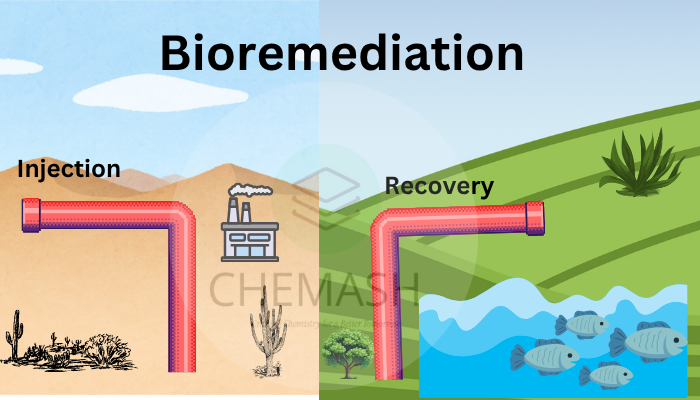
Types of Bioremediation
1️⃣ In-situ Bioremediation
Pollutants are treated at the original site without excavation (e.g., bioventing, biosparging, monitored natural attenuation).
2️⃣ Ex-situ Bioremediation
Contaminated material is removed and treated somewhere else (e.g., landfarming, biopiles, slurry bioreactors).
3️⃣ Phytoremediation
Plants are used to absorb or transform pollutants (especially heavy metals) from soil or water.
4️⃣ Mycoremediation
Fungi — such as white-rot fungi — degrade complex pollutants including pesticides, dyes and hydrocarbons.
Mechanisms & Microbes Used
- Biodegradation — breakdown of contaminants into simpler molecules
- Biotransformation — conversion to less toxic forms
- Bioaccumulation — pollutants stored in biological tissues
- Biosorption — binding of contaminants to cell walls
Common microbes: Pseudomonas, Rhodococcus, Bacillus, Alcanivorax, Phanerochaete etc.
How Bioremediation Works (Step-by-Step)
- Site assessment and contaminant mapping
- Feasibility study
- System design and pilot testing
- Implementation — nutrients, oxygen, or microbial addition
- Monitoring and optimization
- Cleanup verification / Site closure
Applications & Real-World Case Study
- Oil spill treatment
- Industrial wastewater purification
- Heavy-metal contaminated soils
- Pesticide removal from agricultural land
- Land and groundwater restoration
Example case study: Hydrocarbon-degrading bacteria were added after a crude oil spill. Nutrient amendment boosted microbial activity and accelerated TPH reduction within months.
Advantages & Limitations
Advantages
- Cost-effective & environmentally sustainable
- Minimal site disturbance
- Can achieve complete mineralization for some contaminants
Limitations
- Slower process than chemical techniques
- Not effective for all pollutants
- Requires careful monitoring
MCQs on Bioremediations (With Answers)
- Bioremediations uses
A) Chemicals
B) Living organisms
C) Metals
D) Plastics
Answer: B — It relies on microbes, fungi and plants. - Which method treats pollutants without excavation?
A) Ex-situ
B) In-situ
Answer: B — In-situ means on-site treatment. - Phytoremediation involves
A) Microorganisms
B) PlantsAnswer: B — Plants are used. - Which pollutant is often treated using mycoremediation?
A) Oil
B) Radioactive waste
C) Dyes and pesticides
Answer: C — White-rot fungi degrade complex dyes and pesticides. - Biodegradation refers to
A) Binding of contaminants
B) Breakdown of pollutants into simpler molecules
Answer: B.
Bioremediation Quiz (10 Questions for Students)
Write answers on paper — challenge yourself!
- Define bioremediation in one sentence.
- Differentiate between in-situ and ex-situ bioremediation.
- Name two microbes used for hydrocarbon degradation.
- What is phytoremediation? Give one example.
- State one advantage and one disadvantage of bioremediation.
- Explain bioaccumulation in simple words.
- Name one fungal organism used for pollutant degradation.
- Why do bioremediation systems require monitoring?
- Give one example of an industrial application of bioremediation.
- Can bioremediation be used for heavy metals? Why or why not?
Frequently Asked Questions
Is bioremediations safe?
Yes, when designed and monitored properly.
How long does bioremediation take?
Weeks to years depending on contaminants and site conditions.
Can plants remove heavy metals?
Yes — hyperaccumulator plants absorb heavy metals from soil and water.
- EPA — Bioremediation (Soils & Superfund cleanup) — Overview and EPA guidance on bioremediation methods.
- UNEP — Resources on environmental remediation and restoration — Reports and global guidance (search for remediation/contamination reports).
- NCBI — PubMed / NCBI Resources — Search for peer-reviewed bioremediation research and review articles.
- ScienceDirect — Bioremediation topics & journal articles — Collection of reviews and applied studies.
- EPA — Pesticide & remediation resources — Useful if your article discusses pesticide-contaminated sites.
© 2025 CHEMASH
