
Effects on Ecosystems and Human Health
Effects on ecosystems and human health are among the most serious consequences of pollution and waste mismanagement. When harmful substances like heavy metals, plastics, and chemicals enter the environment, they disrupt biodiversity, damage natural habitats, and threaten human well-being. Understanding these effects helps us protect both the planet’s ecological balance and our own health.
Table of Contents
- Impact on Ecosystems
- Impact on Human Health
- Quiz — Effects on Ecosystems and Human Health
- How to Reduce Impacts
- FAQ
- Resources & Links
Impact on Ecosystems
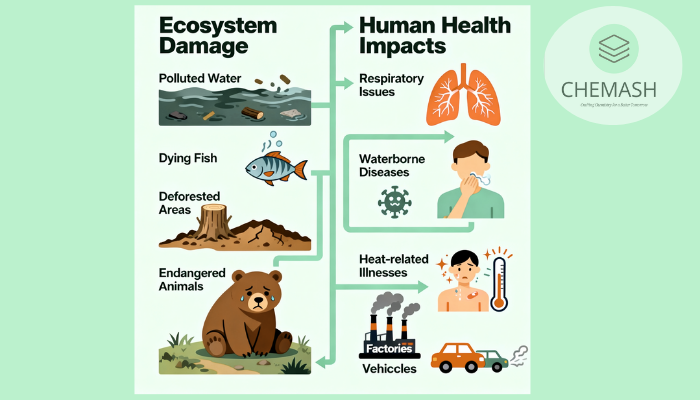
Pollutants such as heavy metals, pesticides, and plastics harm plants and animals. Over time, toxic substances move up the food chain through bioaccumulation. As a result, species diversity drops and habitats change. In severe cases, ecosystems may collapse.
For example, nutrient run-off causes eutrophication in water bodies. Consequently, oxygen levels fall and fish die. Likewise, soil contamination disrupts nutrient cycles and microbial communities that support plant growth.
Key ecosystem effects
- Loss of biodiversity
- Habitat alteration and degradation
- Disruption of food webs
- Reduced ecosystem services (pollination, water purification)
Impact on Human Health
Exposure to polluted air, water, and soil causes both short-term and long-term health issues. For example, air pollution triggers respiratory diseases such as asthma and bronchitis. Contaminated water causes gastrointestinal infections and, in extreme cases, heavy metal poisoning.
Moreover, persistent organic pollutants (POPs) and certain industrial chemicals can disrupt hormones, increase cancer risk, and weaken the immune system. Vulnerable groups — especially children and the elderly — face higher risks.
Common health impacts
- Respiratory problems (asthma, COPD)
- Neurological disorders from heavy metals (lead, mercury)
- Endocrine disruption and reproductive issues
- Increased cancer risk
Quiz – Effects on Ecosystems and Human Health
Answers and brief explanations are provided below using <details> for clarity and search indexing.
- What is bioaccumulation?
a) Plant growth acceleration
b) Accumulation of toxic substances in organisms over time
c) Decomposition of organic matter
d) Nutrient recycling in soil Answer: b) Explanation: Toxic chemicals concentrate in organisms through the food chain, increasing at higher trophic levels. - Which health issue is commonly caused by air pollution?
a) Diabetes
b) Asthma
c) Broken bones
d) Hearing loss Answer: b) Explanation: Polluted air irritates and damages the respiratory system, causing asthma and other lung conditions. - Eutrophication primarily affects:
a) Soil fertility
b) Oxygen levels in water bodies
c) Air quality
d) Noise pollution Answer: b) Explanation: Excess nutrients cause algal blooms that consume oxygen and harm aquatic life. - Persistent organic pollutants (POPs) can cause:
a) Improved immune response
b) Endocrine disruption and cancers
c) Enhanced plant growth
d) Reduced soil contamination Answer: b) Explanation: POPs resist breakdown, bioaccumulate, and can affect hormones and increase cancer risk.
How to Reduce Impacts
- Reduce emissions through cleaner technologies and regulations.
- Implement proper waste management, recycling, and safe disposal.
- Restore habitats and strengthen conservation efforts.
- Monitor pollutants and enforce environmental standards.
- Educate communities and promote sustainable practices.
Frequently Asked Questions
How do pollutants move through food chains?
Small organisms absorb pollutants; predators then eat these organisms and receive higher pollutant doses. Over time, concentrations rise at higher trophic levels — a process called biomagnification.
Can polluted ecosystems recover?
Yes. Recovery often requires pollution source removal, habitat restoration, and long-term monitoring. Recovery speed depends on pollutant type and ecosystem resilience.
Which groups are most vulnerable to pollution?
Children, pregnant women, the elderly, and low-income communities often bear the greatest health and economic burdens from pollution.
External trusted sources:
Published by CHEMASH — Updated: October 12, 2025
script type=”application/ld+json”> { “@context”:”https://schema.org”, “@type”:”Article”, “headline”:”Effects on Ecosystems and Human Health”, “description”:”How pollution and waste impact biodiversity, ecosystems, and human well-being. Includes causes, effects, quiz and FAQs.”, “image”:”https://chemash.in/assets/images/ecosystems-health-hero.jpg”, “author”:{“@type”:”Organization”,”name”:”CHEMASH”}, “publisher”:{“@type”:”Organization”,”name”:”CHEMASH”,”logo”:{“@type”:”ImageObject”,”url”:”https://chemash.in/assets/images/logo.png”}}, “mainEntityOfPage”:{“@type”:”WebPage”,”@id”:”https://chemash.in/effects-ecosystems-human-health”} }