
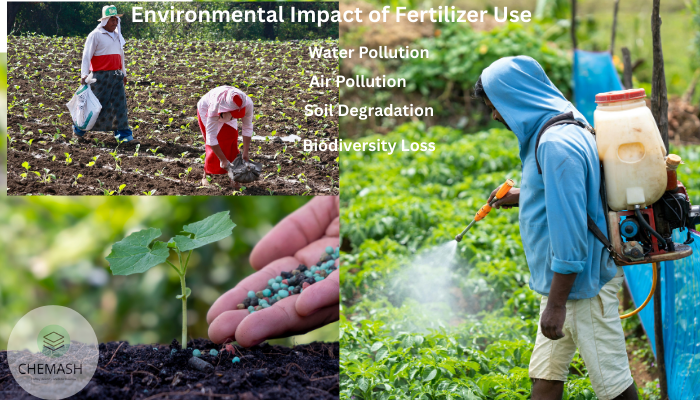
While fertilizers are essential for improving agricultural productivity, excessive and improper use can significantly affect the environment. Both synthetic and organic fertilizers can contribute to pollution and ecosystem imbalance if not managed sustainably. Environmental Impact of Fertilizer Use
Water Pollution
Fertilizers rich in nitrogen and phosphorus can leach into groundwater or run off into nearby water bodies. This causes:
- Eutrophication: Overgrowth of algae in water bodies, depleting oxygen and killing aquatic life.
- Contamination of Drinking Water: Nitrate pollution in groundwater can cause health issues like “blue baby syndrome.”
Air Pollution
Fertilizer use emits greenhouse gases like nitrous oxide (N₂O), which is 300 times more potent than CO₂. Ammonia volatilization also contributes to air quality issues and acid rain.
Soil Degradation
Overuse of chemical fertilizers can alter soil pH, destroy beneficial microbes, and reduce soil organic matter, leading to long-term infertility.
Biodiversity Loss
Runoff of fertilizers into natural habitats can disrupt local flora and fauna, altering ecosystem balance. Excessive nitrogen can harm terrestrial and aquatic biodiversity.
Recommendations for Sustainable Use
- Use integrated nutrient management (INM) approaches.
- Apply biofertilizers and organic composts.
- Follow the “4Rs” principle: Right source, Right rate, Right time, Right place.
- Encourage soil testing and precision farming.
Quiz: Check Your Understanding
1. What environmental issue is most directly caused by fertilizer runoff into lakes and rivers?
A) Acid rain
B) Eutrophication
C) Global warming
D) Ozone depletion
Answer: B
Explanation: Eutrophication results from excess nutrients (especially phosphates and nitrates) entering water bodies, causing algae blooms and oxygen depletion.
2. Which greenhouse gas is released due to fertilizer application?
A) Carbon monoxide
B) Sulfur dioxide
C) Nitrous oxide
D) Methane
Answer: C
Explanation: Nitrous oxide (N₂O), released from nitrogen fertilizers, is a potent greenhouse gas contributing to climate change.
3. Excessive nitrogen in groundwater can cause:
A) Cancer
B) Blue baby syndrome
C) Diabetes
D) Bone deformities
Answer: B
Explanation: Nitrate contamination in drinking water interferes with oxygen transport in infants, leading to methemoglobinemia (blue baby syndrome).
4. What practice helps reduce the environmental impact of fertilizers?
A) Continuous heavy application
B) Monoculture farming
C) Integrated nutrient management
D) Delayed harvesting
Answer: C
Explanation: Integrated nutrient management (INM) promotes the balanced use of organic and inorganic fertilizers, reducing environmental harm.
Related: Biofertilizers and Green Alternatives | Food and Agriculture Organization (FAO)
