
How to Study Smart, Not Hard | Best Study Tips for Students 2026
How to Study Smart ,Studying smart means getting better results in less time. If you are preparing for 2026 exams and feel tired or confused, this guide will change the way you study.
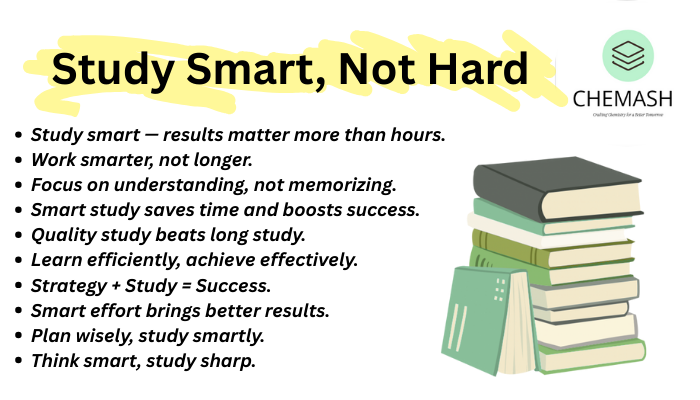
1. Understand Before You Memorize
Smart students never start with memorization. They first understand the concept.
- Ask why and how
- Explain the topic in your own words
- Use examples and diagrams
2. Use the 80/20 Rule
80% of exam questions come from 20% important topics.
- Identify high-weightage chapters
- Focus more on frequently asked topics
- Do not give equal time to everything
3. Study in Short, Focused Sessions
Long study hours reduce focus. Use the Pomodoro Technique.
- 25 minutes study
- 5 minutes break
- After 4 rounds → long break
4. Active Study Beats Passive Reading
- Write short notes
- Solve questions daily
- Teach someone or explain aloud
5. Smart Revision Strategy
| Revision | Time |
|---|---|
| 1st Revision | Same Day |
| 2nd Revision | After 7 Days |
| 3rd Revision | After 30 Days |
6. Make Smart Notes
Smart notes are short, visual, and easy to revise.
- Mind maps
- Flowcharts
- Tables & keywords
7. Practice Tests Regularly
Reading alone will not help you score. Practice is essential.
- Weekly mock tests
- Analyze mistakes
- Improve weak areas
8. Control Distractions
- Keep phone away while studying
- Use app blockers
- Study in a clean, quiet space
9. Sleep & Health Matter
- 7–8 hours sleep
- Light food
- Short walks & breathing exercises
Daily Smart Study Routine
| Time | Activity |
|---|---|
| Morning | Difficult subject |
| Afternoon | Practice questions |
| Evening | Easy subject |
| Night | Revision |
Quick MCQ Quiz
- Studying smart means:
Answer: Studying efficiently with better strategies - Which technique improves focus?
Answer: Pomodoro Technique - What is more important for memory?
Answer: Regular revision
Final Tip:
Success is not about studying more hours — it’s about studying SMARTER.
(Punjabi / Hinglish)
Bahut saare students ghante ghante padhde ne, par result nahi aunda. Reason simple hai — hard study ho rahi hai, smart nahi.
- Samajh ke padho, ratta mat maro
- Important topics pe zyada focus karo
- Roz thoda-thoda revise karo
- Mobile door rakho padhai time
Yaad rakho
2 ghante smart padhai = 6 ghante distracted padhai
2026 exams crack karne layi, strategy change karni zaroori hai
30-Day Smart Study Challenge for Students (2026)
Follow this challenge and feel the difference in focus, memory and confidence.
| Day | Task |
|---|---|
| 1–3 | Create study timetable + identify weak subjects |
| 4–6 | Study concepts deeply (no memorization) |
| 7 | Weekly revision + short test |
| 8–10 | Practice MCQs & numericals |
| 11–13 | Make short notes & mind maps |
| 14 | Mock test + analysis |
| 15–18 | Focus on weak areas only |
| 19–21 | Daily revision + error notebook |
| 22–25 | Full syllabus practice (mixed subjects) |
| 26–28 | Final revision using short notes |
| 29–30 | Final mock test + confidence boost |
Challenge Rule: No phone during study, minimum 7 hours sleep, daily revision mandatory.
Trusted Study Resources
Why Students Trust CHEMASH
CHEMASH Solves Student Problems
Clear Solutions, Not Just Theory
Online Classes & Digital Learning
Tuition Support for Students
A Trusted Student Brand
CHEMASH Mission:
To help students learn better, think smarter, and succeed confidently in exams and life.
