
Water Treatment Methods
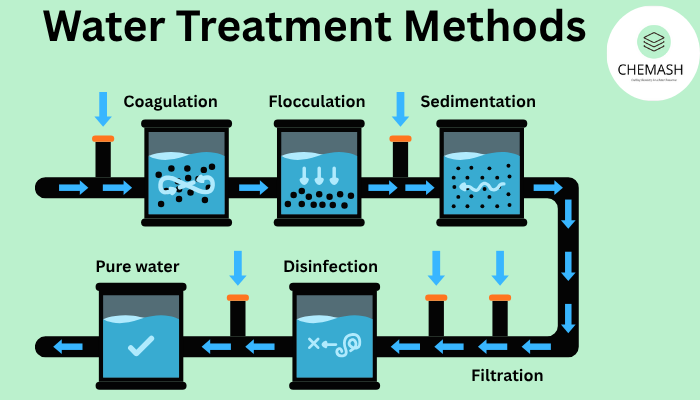
Overview of common water treatment techniques to ensure safe and clean water for human consumption and use.
Physical Treatment Methods
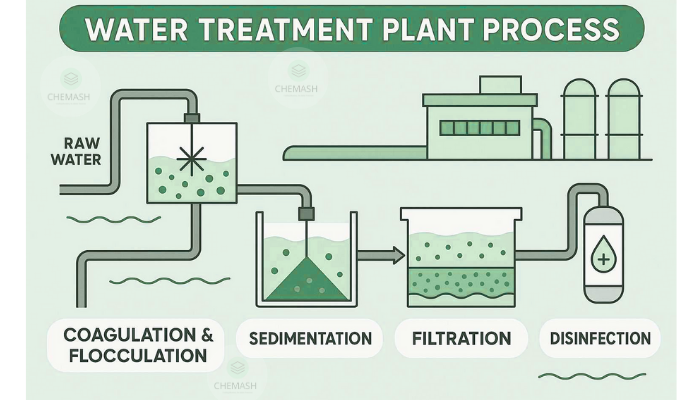
Physical treatment removes suspended solids and large impurities using gravity or mechanical separation.
- Screening: Removes large debris via mesh or bar screens.
- Sedimentation: Gravity settles heavy particles in clarifiers or sedimentation tanks.
- Filtration: Sand, gravel or activated carbon filters trap finer suspended solids.
- Flotation: Air flotation lifts lighter solids to the surface for skimming.
Chemical Treatment Methods
Chemical methods improve water quality by coagulating particles, disinfecting pathogens, or adjusting chemistry.
- Chlorination: Effective disinfection against bacteria and many viruses.
- Coagulation & Flocculation: Chemicals (e.g., alum) cause small particles to form larger flocs that settle.
- Neutralization: pH adjustment using acids or bases.
- Oxidation: Ozone or permanganate remove iron, manganese and oxidize organics.
Biological Treatment Methods
Biological treatment harnesses microbes to degrade organic pollutants — widely used in wastewater treatment.
- Activated Sludge Process: Aerobic bacteria degrade organic matter in aeration tanks.
- Trickling Filters: Biofilms on media break down contaminants as water trickles through.
- Constructed Wetlands: Plants and microbes naturally clean water in engineered wetland systems.
Advanced Treatment Technologies
These technologies produce high-quality water suitable for drinking or industrial use.
- Reverse Osmosis (RO): Removes dissolved salts and many contaminants via semipermeable membranes.
- Ultraviolet (UV) Disinfection: Inactivates pathogens without chemicals.
- Ion Exchange: Softens water by replacing hardness ions (Ca2+, Mg2+).
- Membrane Filtration: Microfiltration, ultrafiltration and nanofiltration remove particles and microorganisms.
Quiz – Water Treatment Methods
Select an answer and click Check Answers to see explanations.
- 1. Which process uses microorganisms to decompose organic pollutants?
- Sedimentation
- Chlorination
- Activated Sludge Process
- Reverse Osmosis
- 2. What is the primary purpose of chlorination?
- Remove suspended solids
- Kill pathogens
- Adjust pH
- Filter water
- 3. Reverse osmosis removes:
- Large debris
- Dissolved salts and impurities
- Microorganisms only
- Organic matter only
- 4. Which treatment involves settling of particles by gravity?
- Filtration
- Sedimentation
- Coagulation
- UV Disinfection
Check AnswersShow ExplanationsReset
Frequently Asked Questions
Q: Is RO-treated water safe to drink?
A: Yes, RO removes many contaminants but also reduces minerals; post-treatment remineralization is sometimes used for taste and health.
Q: Does chlorination remove chemical pollutants?
A: Chlorination primarily disinfects; it does not remove many chemical pollutants and may react to form disinfection by-products if organics are present.
Q: When are constructed wetlands recommended?
A: For low-cost, low-energy tertiary treatment of agricultural runoff, stormwater, or small communities — where land area is available.
Internal & External Resources
- External (technical): US EPA — Drinking Water
- External (health & guidelines): WHO — Water, Sanitation & Health
जल उपचार के तरीके
मानव उपभोग और उपयोग के लिए सुरक्षित और स्वच्छ जल सुनिश्चित करने हेतु सामान्य जल उपचार तकनीकों का सारांश।
भौतिक उपचार (Physical)
- स्क्रीनिंग: बड़े कचरे को हटाना।
- सेडीमेंटेशन: गुरुत्वाकर्षण द्वारा भारी कण बैठ जाते हैं।
- फिल्ट्रेशन: रेतीले फिल्टर से छोटे कण हटते हैं।
रासायनिक उपचार (Chemical)
- क्लोरीनेशन: रोगजनकों को मारना।
- कोएगुलेशन/फ्लोकेशन: रासायनिक जोड़ने से कण ठोस बनकर बैठते हैं।
जैविक उपचार (Biological)
- एक्टिवेटेड स्लज प्रक्रिया: सूक्ष्मजीव कार्बनिक पदार्थ तोड़ते हैं।
- कंस्ट्रक्टेड वेटलैंड्स: पौधे और सूक्ष्मजीव प्राकृतिक रूप से शुद्ध करते हैं।
© CHEMASH
