
Chemistry Main Topics – Major Branches of Chemistry Explained
Main topics represent the fundamental branches of chemistry that study the composition, structure, properties, and transformations of matter. Chemistry plays a vital role in understanding natural processes, developing new materials, medicines, fuels, and improving industrial and environmental sustainability.
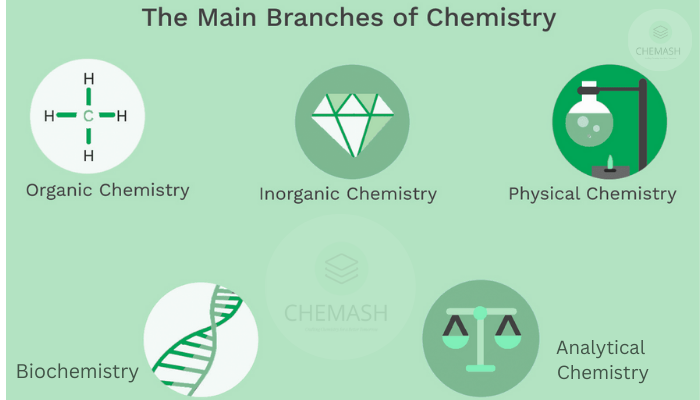
Table of Contents
- Physical Chemistry
- Organic Chemistry
- Inorganic Chemistry
- Environmental Chemistry
- Industrial Chemistry
- Biochemistry
- Analytical Chemistry
Physical Chemistry
Physical chemistry is one of the most important chemistry main topics that combines physics and chemistry. It deals with thermodynamics, chemical kinetics, electrochemistry, surface chemistry, and the study of solutions. This branch explains how and why chemical reactions occur and how energy changes during chemical processes.Chemistry LibreTexts.
Organic Chemistry
Organic chemistry focuses on carbon-containing compounds such as hydrocarbons, alcohols, ethers, aldehydes, ketones, carboxylic acids, polymers, and biomolecules. It forms the backbone of pharmaceuticals, petrochemicals, plastics, dyes, and synthetic fibers.
Inorganic Chemistry
Inorganic chemistry deals with elements and compounds other than most carbon-based compounds. Topics include atomic structure, periodic table trends, coordination compounds, metallurgy, acids, bases, and salts. This branch is essential for understanding materials, catalysts, and metal extraction.
Environmental Chemistry
Environmental chemistry studies chemical processes occurring in the environment. It focuses on air pollution, water pollution, soil contamination, acid rain, greenhouse effect, ozone depletion, and climate change. This branch plays a crucial role in environmental protection and sustainable development.Royal Society of Chemistry (RSC).
Industrial Chemistry
Industrial chemistry explains large-scale chemical manufacturing processes used in industries. Major topics include petrochemicals, fertilizers, cement, paper, polymers, dyes, detergents, and pharmaceuticals. It bridges laboratory chemistry and commercial production.NCERT
Biochemistry
Biochemistry is the branch of chemistry that studies the chemical processes within living organisms. It includes carbohydrates, proteins, enzymes, lipids, vitamins, hormones, and nucleic acids. Biochemistry is fundamental to medicine, genetics, biotechnology, and molecular biology.
Analytical Chemistry
Analytical chemistry focuses on the qualitative and quantitative analysis of substances. It uses classical chemical methods and modern instrumental techniques such as chromatography, spectroscopy, and electrochemical analysis to determine composition and purity.
Major Branches of Chemistry Explained
- Physical Chemistry
- Organic Chemistry
- Inorganic Chemistry
- Environmental Chemistry
- Industrial Chemistry
- Biochemistry
- Analytical Chemistry

Pingback: What is Biology? How to Study Biology Smartly for Exams 2026 |